

What You Need to Know When Applying to Federal Jobs
The following post explores What You Need to Know When Applying to Federal Jobs.
If you’re thinking about applying to federal jobs, there’s a lot to understand about how the process works and what agencies are looking for (especially if you’re new to federal employment).
Read: How the Merit Hiring Plan Affects Federal Job Seekers
Related: Navigating Major SES Changes
From crafting a two-page Federal Resume to navigating USAJOBS, preparing ECQs, or understanding specialized requirements for senior roles, the federal hiring system can feel complex.
Here’s what you need to know to help you see the big picture.
Overview
Navigating a career in the federal government can feel overwhelming, especially with the wide range of programs, forms, pay structures, and eligibility rules involved. Whether you’re transitioning from the military, moving from the private sector, or seeking advancement, there are many factors to consider.
This compilation brings together key topics for federal job seekers, covering everything from career planning and application requirements to compensation, security clearances, and specialized programs. Use this as a cornerstone to explore key topics that matter most to your federal job search.
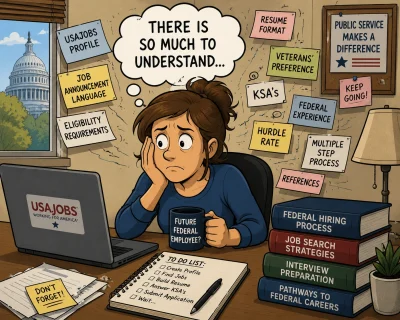
Career Paths
Federal employment offers a wide range of career opportunities across agencies, disciplines, and levels of responsibility. Whether you’re exploring a specific profession or considering how your background translates into public service, these resources can help you better understand the paths available.
Career Planning
Pursuing a federal career often requires a different level of planning than a traditional private-sector job search. From career transitions to advancement strategies, these resources explore how to navigate long-term career decisions within the federal system.
- Military Service as a Pathway to a Federal Career
- Top 10 Federal Agencies With the Most Federal Employees
- Top 10 Most Attainable Federal Jobs
- Top 10 US Cities for Federal Jobs (Outside Washington, DC)
- Transitioning from Private Sector to Federal Employment
- Understanding the Career Transition Assistance Plan (for Federal Employees)
- Understanding the DISES and DISL Promotion Process (for Federal Employees)
Compensation
Federal compensation includes more than just base salary, with structured pay systems, locality adjustments, and unique executive compensation models. Understanding how federal pay works can help you make more informed career decisions and set realistic expectations.
Documentation
Federal applications often require supporting documentation beyond a resume, especially for specialized or senior-level roles. These resources explain the written materials and qualification documents that may play a critical role in the hiring process.
- Explaining the Four Essay Questions for Federal Jobs
- Understanding KSAs, MTQs, and ECQs in Federal Jobs
- Understanding QRFs (for Federal Job Seekers)
Federal Eligibility
Meeting the qualifications for a federal job does not always mean you are eligible to apply. Federal hiring includes a range of eligibility requirements tied to citizenship, hiring authorities, background considerations, and applicant status.
- Can You Get a Federal Job with a Criminal Record?
- Eligibility Requirements for Federal Employment
- Why You Can Be Qualified But Still Ineligible for a Federal Job
Federal Resumes
Federal Resumes differ significantly from traditional Resumes and are evaluated using different criteria. These resources explain formatting expectations, content strategy, and the key differences job seekers should understand before applying.
- Building Your Two-Page Federal Resume
- DIY Two-Page Federal Resume Template and Example (in PDF)
- Navigating Major Changes to the Federal Resume
- Options for Creating a Federal Resume
- Understanding a Federal Resume vs. Government Resume
Federal Resume Writers
Hiring an experienced Federal Resume Writer is an investment in yourself and your job search. Time savings and peace of mind come from knowing your Federal Resume is in experienced hands. Rather than navigating complex requirements on your own, you can focus on pursuing opportunities with confidence that your qualifications are being presented effectively.
Forms
Federal hiring often involves a variety of government forms used to assess eligibility, background history, military preference, and employment qualifications. Understanding what these forms are and when they are required can help reduce confusion during the application process.
- Documents Needed for Applying to Federal Jobs
- Understanding the OF-306 Form (for Federal Job Seekers)
- Understanding the SF-15 Form (for Federal Job Seekers)
- Understanding the SF-50 Form (for Federal Job Seekers)
- Understanding the SF-85P Form (for Federal Job Seekers)
- Understanding the SF-86 Form (for Federal Job Seekers)
GS Levels
Most federal civilian jobs are structured around the General Schedule (GS) pay system, which determines compensation and position level. Understanding how GS grades work is essential for identifying appropriate opportunities and evaluating career progression.
Job Applications
The federal application process can feel unfamiliar, especially for first-time applicants accustomed to private-sector hiring. These resources provide practical guidance on how the process works, what to expect, and how to improve your chances of success.
- Does the Federal Government Hire During a Hiring Freeze?
- How the Federal Application Process Works (for Beginners)
- Identifying Red Flags in Federal Job Announcements
- Pros and Cons of USA Hire℠ Assessments
- Tips for Applying to Federal Jobs
While federal hiring centers heavily around official application systems, LinkedIn can still play a valuable supporting role in your job search. These resources explain how professional branding and networking can complement a federal career strategy.
Merit Hiring Plan
The Merit Hiring Plan has introduced major changes to how federal candidates are evaluated, including new resume expectations and assessment criteria. These resources help break down what has changed and how job seekers should adapt.
Programs
The federal government offers specialized hiring programs designed to support students, veterans, transitioning service members, and individuals with disabilities. These pathways can create valuable access points depending on your background and eligibility.
- Understanding SkillBridge (for Service Members)
- Understanding the SpouseWorks Program for Military Spouses
- Introduction to The Pathways Program (for Students and Recent Graduates)
- Introduction to the Workforce Recruitment Program (for Students and Recent Graduates with Disabilities)
Pros and Cons
Federal employment offers distinct advantages, but it is not the right fit for everyone. These resources explore both the benefits and tradeoffs so you can better evaluate whether a government career aligns with your goals.
Security Clearance
Some federal positions require a security clearance, while others do not. Understanding how clearance requirements work, what the process involves, and how it affects eligibility can help you target the right opportunities.
- Applying to Federal Jobs without a Security Clearance
- Understanding L Access Authorization in Federal Employment
- Understanding Q Access Authorization in Federal Employment
- Understanding Top Secret Clearance in Federal Employment
Senior Executive Service
Senior Executive Service (SES) roles represent the highest levels of civilian federal leadership and come with unique qualification standards. These resources explain the executive hiring process, compensation structure, and specialized requirements for senior candidates.
- How to Write ECQs Using CCAR
- Tips for Selecting Your ECQ Stories
- Understanding Executive Schedule Pay vs. SES Pay (for Federal Job Seekers)
- Understanding SES Sabbatical Eligibility (for Federal Employees)
- Understanding the Difference Between SES, ST, and SL (for Federal Job Seekers)
- Understanding the New ECQs
- Understanding the SES Candidate Development Program (SESCDP)
- Understanding the SES Qualifications Review Board (for Federal Job Seekers)
- Why Your ECQs Didn’t Pass QRB and How to Fix Them
Special Preference
Certain applicants may qualify for hiring preferences or accommodations based on military service, disability status, or family affiliation. Understanding these special provisions can significantly impact eligibility and competitiveness.
- Understanding Military Spouse Preference (for Federal Jobs)
- Understanding Reasonable Accommodations (for Disabled Federal Job Seekers)
- Understanding Veterans’ Preference (for Federal Job Seekers)
- Understanding Veterans’ Recruitment Appointment (for Federal Job Seekers)
Timeline
Federal hiring timelines are often longer and more complex than private-sector hiring processes. These resources explain what contributes to delays and what job seekers should realistically expect from application to decision.
USAJOBS.gov
USAJOBS serves as the primary hiring portal for most federal positions and is a central part of the application process. Learning how to navigate the platform effectively can improve both efficiency and visibility in your search.
Work Types
Federal employment includes a variety of appointment types, schedules, and service classifications beyond traditional full-time permanent roles. These resources explain the different employment structures available across the federal workforce.
- Does the Federal Government Offer Part-time Positions?
- Understanding Detail Appointments in Federal Employment
- Understanding Federal Employment Service Types
- Understanding Foreign Service in Federal Employment
- Understanding Intermittent Appointments in Federal Employment
- Understanding Non-Permanent Appointments in Federal Employment
- Understanding Seasonal Appointments in Federal Employment
- Understanding Shift Work in Federal Employment
- Understanding Temporary Appointment in Federal Employment
- Understanding Term Appointments in Federal Employment
In Conclusion
In conclusion, I hope this article is a helpful compilation of everything you need to know when applying to federal jobs. This ever-growing collection of articles is designed to answer common questions and provide trusted guidance for a variety of federal job search topics.
If you’re ready for professional assistance with building your two-page Federal Resume, my team and I are here to support you. Please use the Contact Us or Submit Your Resume for a risk-free evaluation. JobStars is an A+ BBB-rated service that has earned multiple consecutive Complaint Free Awards.
About the Author: Doug Levin