
Understanding Foreign Service in Federal Employment
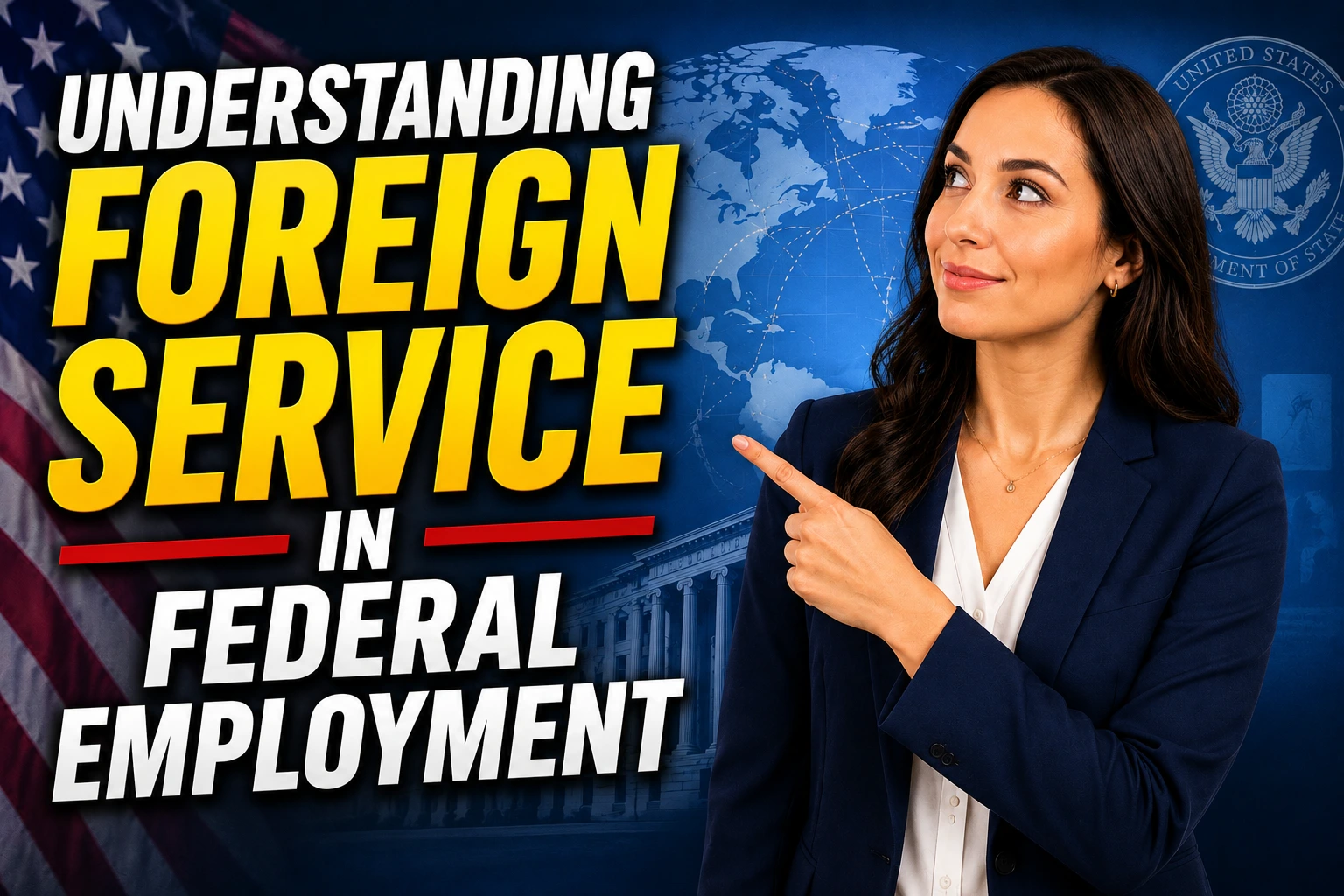
The following post explores Understanding Foreign Service in Federal Employment.
Have you ever come across a federal job announcement that mentioned the Foreign Service and wondered how it differs from other government careers?
Read: Understanding Federal Employment Service Types
Related: Does the Federal Government Offer Part-time Positions?
Understanding the Foreign Service can open the door to opportunities that you may overlook. Before pursuing these positions, it helps to understand what exactly this is.
Here’s what you need to know.
Overview
The Foreign Service is a branch of federal employment that supports the United States’ work and presence around the world. If you pursue a Foreign Service career, your work will involve functions that help support U.S. interests overseas.
When most people think of the Foreign Service, they picture diplomats working at embassies in foreign countries. However, it also includes professionals in fields such as communications, IT, healthcare, engineering, security, and management.
It is worth noting that the Foreign Service is only one part of the federal employment landscape. This is different from other systems such as the Civil Service and the Senior Executive Service (SES).

Agencies That Employ Foreign Service Personnel
The U.S. Department of State employs the largest number of Foreign Service personnel and is the agency people associate most closely with Foreign Service careers. These employees support diplomatic missions, consular services, public diplomacy, and other activities that advance U.S. interests.
Foreign Service opportunities can also be found with agencies that have international responsibilities. Examples include the U.S. Agency for International Development (USAID), the U.S. Department of Agriculture, and portions of the U.S. Department of Commerce.
Common Career Paths
The Foreign Service offers multiple career paths. Some positions focus on diplomacy and foreign policy, while others support operations through specialized technical, administrative, security, medical, or communications expertise.
You may encounter titles such as Foreign Service Officer, Foreign Service Specialist, or Foreign Service Limited employee during your job search. Each role serves a different purpose, yet all contribute to the broader mission of supporting U.S. interests and activities abroad.
Working in the United States and Overseas
One common misconception is that every Foreign Service employee spends an entire career living overseas. The reality is that many of these employees alternate between assignments in the United States and assignments in foreign countries.
The location and travel requirements depend on the agency, occupation, and assignment cycle. You may spend several years overseas before returning to a domestic position, creating a career path that combines international experience with stateside service.
Finding Foreign Service Opportunities
If you are interested in a Foreign Service career, a good starting point is exploring federal vacancy announcements and agency career websites. Some Foreign Service opportunities appear on USAJOBS, while others are advertised directly through the hiring agency.
The hiring process varies by position and agency. Depending on the role, you may encounter examinations, assessments, interviews, medical evaluations, security clearances, language requirements, or specialized experience requirements before receiving an appointment.
Challenges of Foreign Service Employment
Foreign Service careers can provide unique opportunities, but they also come with unique challenges. Frequent relocation, changing assignments, and extended periods away from family and support networks can require significant personal and professional flexibility.
Depending on the position and location, you may encounter language barriers, cultural differences, security restrictions, or living conditions that differ substantially from those in the United States.
Is the Foreign Service Right for You?
The Foreign Service can be an appealing option if you enjoy new environments, international issues, and opportunities to work with people from different cultures. It may also provide unique experiences that are not commonly found in traditional federal career paths.
You should consider the lifestyle requirements as carefully as the career opportunities. Frequent relocation, overseas assignments, family considerations, and adapting to changing environments are all factors that can influence your long-term satisfaction and success.
In Conclusion
In conclusion, I hope you find this article helpful for Understanding Foreign Service in Federal Employment. If you are interested in international service, global engagement, and a career that may take you around the world, I recommend keeping it on your radar.
If you’re ready to build your two-page Federal Resume, my team and I are here to support you. Please use the Contact Us or Submit Your Resume for a risk-free evaluation. JobStars is an A+ BBB-rated service that has earned multiple consecutive Complaint Free Awards. We look forward to hearing from you!
About the Author: Doug Levin