
Job Interview Tips for Job Seekers
The following post explores the best Job Interview Tips for Job Seekers.
Job interviews are more than just conversations — they’re sales presentations. And you’re the product. To succeed, you need to anticipate potential objections and make a compelling case for why you’re the right fit.
Read: 5 Tips for Improving Your Resume
Related: Common Interview Mistakes
Whether you’re aiming for your dream job or applying for your first role, preparation is everything. These five tips will help you make a strong impression and improve your chances of getting hired.
Here’s what you need to know.
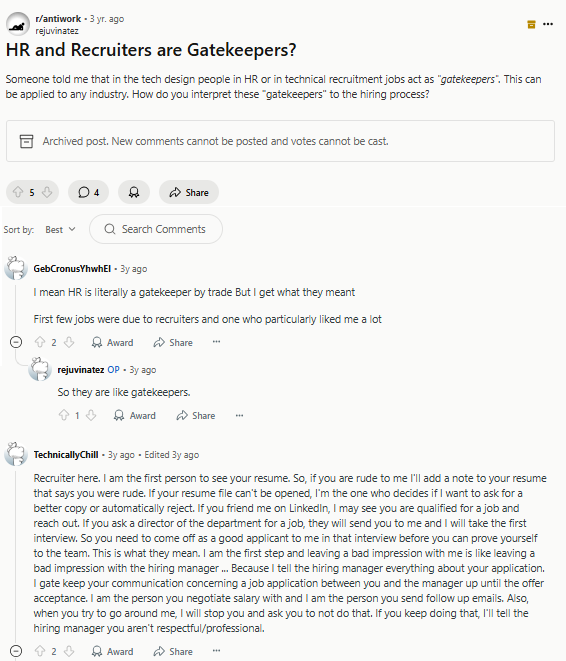
Understand the Gatekeeper: HR
HR professionals are often the first screeners in the hiring process, and their job is to filter out candidates who don’t align with company values or culture. One of the most common interview questions they ask is: “Why are you looking to leave your current job?”
Avoid badmouthing your employer. It’s a red flag. Instead, focus on what excites you about the new opportunity — the role, mission, or team.
Below is a screenshot of a Reddit forum discussion about HR gatekeepers.
Research the Company
Interviewers expect you to know the basics — and more. Visit the company’s website, scan its recent news, and explore its LinkedIn page. Learn about its size, industry, and values. In the interview, reference specific things you found compelling. This shows genuine interest in the company, not just the position.
Practice Common Interview Questions
Many hiring managers rely on standard interview questions — not because they’re lazy, but because they allow for easier comparison between candidates.
Expect questions about your strengths, weaknesses, and how you handle pressure. For specialized roles (like product owners), scenario-based questions may be used to test decision-making and collaboration skills. One of the most overlooked strategies? Practice. Rehearse with a friend or in front of a mirror to get comfortable.
Ask Smart Questions
Interviewers aren’t just looking for qualified candidates — they’re looking for motivated ones. Asking thoughtful questions shows you’re seriously considering the role and want to know if it’s the right fit.
Good questions might include:
-
What are the team’s biggest priorities right now?
-
How will success be measured in this role?
-
What’s the timeline for next steps?
Be sure to ask who to follow up with and when to expect a decision.
Don’t Overlook the Details
First impressions matter — and they happen fast. Dress appropriately, arrive on time, and bring printed copies of your resume and references. If it’s a phone interview, choose a quiet place, use a good connection, and smile as you speak (it really does affect your tone).
Small missteps — like background noise, fumbling for answers, or seeming unprepared — can cost you. Attention to detail signals professionalism.
In Conclusion
In conclusion, I hope this article helps you feel more confident and prepared heading into your next job interview. With the right mindset and a bit of strategic prep, you’ll be well on your way to making a strong impression and landing the offer.
About the Author: Doug Levin