

Understanding GS Level in Federal Jobs

The following post explores the topic of Understanding GS Levels in Federal Jobs.
New to USAJOBS? If so, you might be unfamiliar with GS levels. Before you start searching and applying to federal jobs, it’s important to step aside and think about what GS level you fall under.
Read: How to Make a Federal Resume
Related: Best Federal Resume Writing Services
By knowing your GS level, you’re better equipped to evaluate job announcements and figure out which ones to apply to. Here’s what you need to know about GS levels.
Overview
Basically, the General Schedule (GS) is the pay scale that most federal agencies use for wages and ranks.
The GS system consists of 15 grades, each with 10 steps, providing a framework for career progression and salary increases. In general, the higher the GS level, the more advanced and specialized the position.
Here is a screenshot of USAJOBS on LinkedIn helping job seekers understand the GS pay scale.
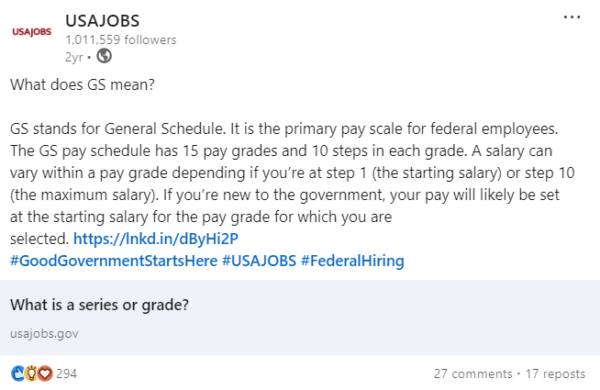
Pictured: USAJOBS post on LinkedIn about GS levels.
GS 3-7: Entry to Associate Level
Positions in the GS 3-7 range are typically entry to associate-level roles. GS 3-7 jobs provide an excellent opportunity to gain experience in the federal government and build a foundation.
Common job titles in this range include administrative assistants, clerks, and technicians.
GS 8-12: Professional Level
GS 8-12 positions are generally considered professional level. GS8-12 roles require specialized knowledge and skills, often necessitating a bachelor’s degree and several years of relevant experience. GS-11 and GS-12 positions might require advanced degrees or significant work experience.
Common job titles in this range include analysts, specialists, and managers.
GS 13-15: Management & Senior Level
Roles at the GS 13-15 level are managerial to senior leadership roles, often including supervisory responsibilities. A master’s degree or higher and extensive professional experience are typically needed.
Common job titles in this range include senior leaders, division directors, and deputy directors.
GS 15+/SES: Senior Executive Level
The GS-15 and Senior Executive Service (SES) levels represent the top tier of federal employment. Candidates need extensive experience, advanced degrees, and a proven track record of leadership. SES positions involve significant responsibility, overseeing entire departments or agencies, and shaping national policies.
Common job titles in this range include agency directors, chief operating officers, and under secretaries.
In Conclusion
In conclusion, understanding what GS level you fall under is key when seeking federal employment. I hope you find this article helpful in figuring out what GS-level you should be targeting. With GS levels explained, you can more effectively navigate the application process and identify opportunities that align with your background.
About the Author: Doug Levin