

Pros and Cons of Working Through an Employer of Record (EOR)

The following post explores the Pros and Cons of Working Through an Employer of Record (EOR).
Are you targeting overseas employment opportunities? If so, depending on where you’ll be living, there’s a decent chance that you could be working through an Employer of Record (EOR).
Read: How Your Credit Score Impacts Your Job Search
Related: Tips for Moving From Consulting to Industry
Before accepting a job offer through an EOR, it’s important to carefully consider both the benefits and potential drawbacks as a job seeker.
Here’s what you need to know.
Overview
What is an Employer of Record (EOR)? An EOR is a third-party organization that legally employs workers on behalf of another company (handling payroll, taxes, benefits, and compliance with local labor laws).
Basically, the EOR is the middleman that takes on the legal responsibility of employment while allowing the company to manage day-to-day work without the complexities of local compliance.
Here’s a link to a Reddit discussion about working through an EOR.
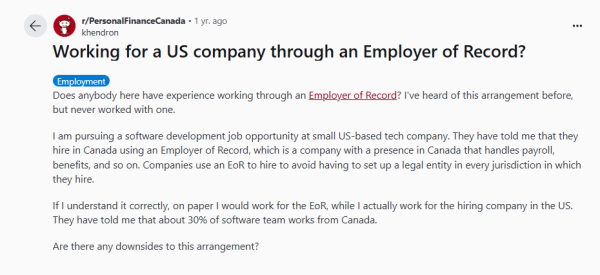
Pictured: Screenshot of a Reddit discussion about working for an EOR.
Hypothetical Example
Here’s a hypothetical example of working through an EOR.
Imagine a fast-growing U.S.-based startup that is looking to hire a remote software engineer living in Brazil. The company doesn’t have a legal entity in Brazil, which means extending a job offer could cause unforeseen issues with payroll, taxes, benefits, and legal compliance.
Instead of hiring that individual directly, the company partners with an EOR. As a result, the individual is technically employed by the EOR. The EOR takes on the responsibility of managing payroll, taxes, benefits, and ensuring legal compliance with Brazilian labor laws.
While the software engineer works directly with the startup, the EOR handles all the administrative and legal aspects of employment, allowing the startup to hire talent in Brazil without the complexities of setting up a local entity.
Pros
- Simplified Onboarding – EORs streamline the hiring and onboarding process (especially for international or remote roles) which makes the onboarding process much smoother for you.
- Access to Global Opportunities – Working through an EOR allows you to work for a company in another country without worrying about the complexities of international tax laws or visas.
- Legal Compliance – Being employed through an EOR helps ensure compliance with local labor laws. It offers reinforcement for both you and the company in safeguarding against potential legal issues.
Cons
- Limited Employer Benefits – If you’re working through an EOR you might not receive perks like stock options or company-specific benefits that direct employees enjoy.
- Multiple Layers – Resolving issues (e.g., payroll software errors) is trickier when working through an EOR. It may require coordinating with both the company you’re working for as well as the EOR.
- Potential for Misclassification – When working for an EOR there’s a risk of being misclassified as a contractor rather than an employee (which can impact your taxes and benefits).
In Conclusion
In conclusion, I hope this article helps you understand the pros and cons of working through an EOR. Before accepting an offer, it’s important to consider these factors to determine if it’s the right fit for your situation.
About the Author: Doug Levin