

Exploring a Career in Video Editing
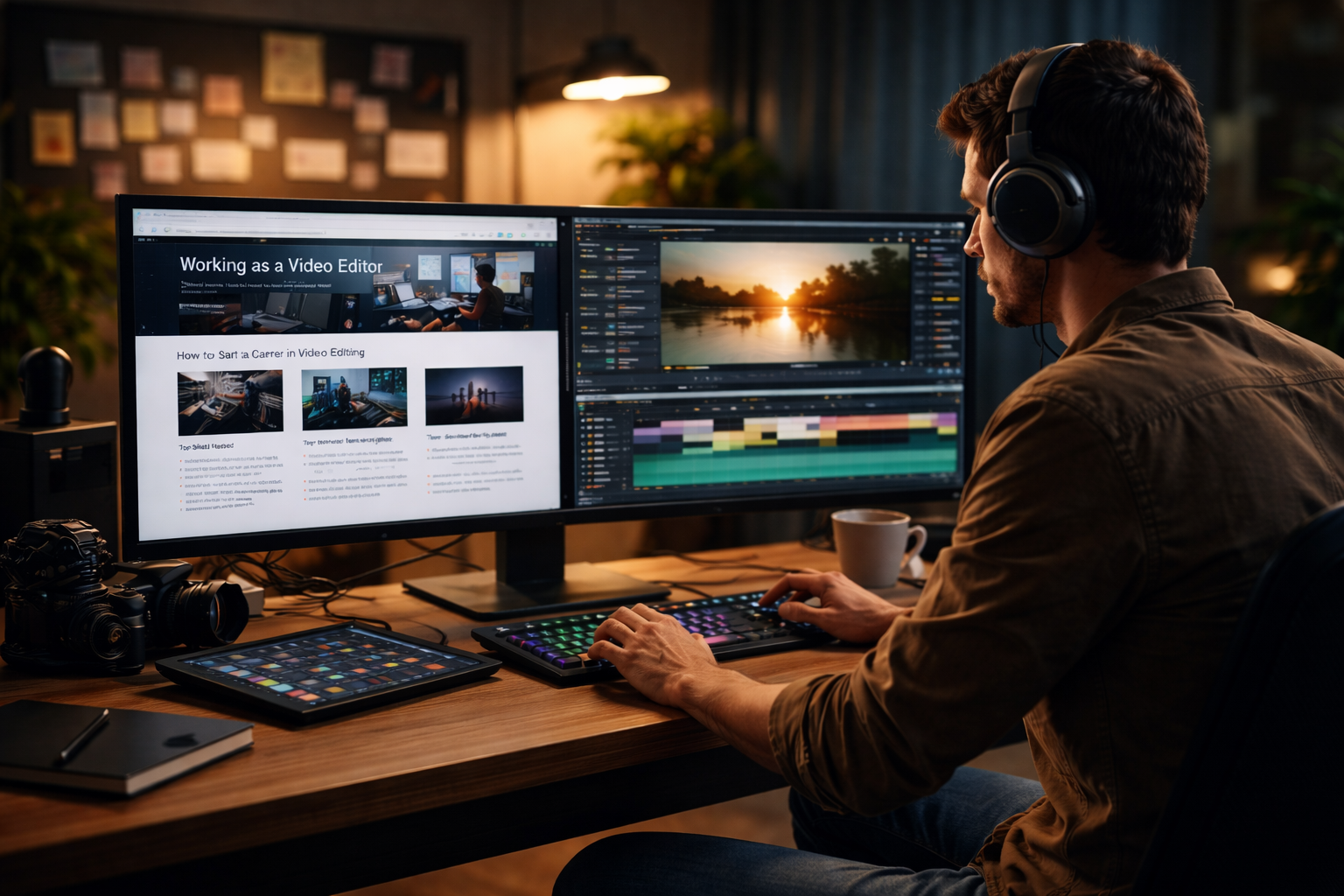
The world’s digital landscape is constantly changing, and one of the most effective methods of communication, marketing, and entertainment is through videos. Videos can be found on YouTube, social media, corporate marketing, and film production. Because of this, there is a global demand for jobs in video editing. This field of work can be great for anyone, whether you are a beginner in search of a creative career, or are a seasoned professional looking for new opportunities to increase your income. Video editing has a lot of options available to it, and the potential for long-term growth is significant.
This guide seeks to give you the information necessary to understand video editing careers, the skills needed, the types of jobs available, what you can expect to earn, and the opportunities the future holds. With this information, you can build a career in professional video editing in this highly competitive industry.
Video Editing as a Career
Video editing is the process of reviewing video meeting to choose, arrange, and improve all the necessary the video footage so that it tell a story. Video editing isn’t just about chopping together some clips. It’s about story telling, timing, sound, color, graphics, design, effects, and so much more. A video editor has the power to turn boring footage into exciting content that has a message and or information to convey.
With the evolution of digital industries, companies use videos to showcase products, describe services, and establish a brand. This need has turned video editing into a profession. Editors collaborate with content creators, filmmakers, brands, agencies, and media companies across the globe.
Reasons for the High Demand for Video Editing Jobs
The need for professional video editors has been driven by the increasingly popular digital content platforms. Video content is in great demand on YouTube, TikTok, and Instagram Reels, while online courses, podcasts, ads, and streaming services rely heavily on video. Because video garners greater audience engagement, brands are increasingly allocating budget resources to video.
The increase in remote work has led to a greater number of available editing positions. Editors collaborate with clients all over the world without in-person meetings. Access to freelance platforms, client outreach, and remote video editing contracts has helped establish video editing as a legitimate global profession.
Types of Video Editing Jobs
Video editing is a complex industry with numerous possible career avenues. Each of these types of video editing encompasses unique skills, and requires a different level of creativity.
Freelance Video Editing
Freelance work means working with clients on projects or contracts. Working as a freelancer means having more flexibility, being able to set your own price, and working with as many clients as you want. Freelancers usually work on editing Youtube videos, social media videos, commercials, and online classes.
Full-Time In-House Editor
Companies usually hire full-time editors to assist in their marketing, branding, and internal communications. In-house roles are more stable due to their fixed working hours, and extra benefits. In-house editors often work with marketing and other creative teams.
Film and Television Editing
This involves working with movies, and TV shows, or editing videos for web series and documentaries. Film editing is usually seen as one of the most prestigious video editing careers. This role involves advanced video editing and story telling.
Social Media Video Editor
With the rise of TikTok and Youtube Shorts, editing videos for social media has now become a full-time career for some. Video editors in this role create interactive and fun videos that are often fast-paced. This is a niche that many editors are now calling their own.
Corporate and Commercial Editing
In this role, editors create corporate videos which are videos for training, products, advertisements, and business presentations. This role is a bit more corporate and focuses on clarity and professionalism.
How to Start a Career in Video Editing
You do not need to have a degree to become a video editor, but you must have a lot of practice and learned knowledge. It is best for beginners to choose one software and practice the editing techniques. A simple and good way to practice is following online tutorials and doing exercises.
An easy but important first step for editors is to build a good portfolio. To edit, you can use your own projects, videos from YouTube, short films, and sample ads. A portfolio will show your skill in a way better than any resume could.
Networking is crucial when talking to new people to help content videos, being a marketer, or talking to new agencies. Being able to connect with an editor is very helpful because every editor has to begin with as an amateur and then go onto bigger audiences after that point.
Income Potential in Video Editing Jobs
One is to understand that being an editor gives you a variety of amounts of money depending on experience, where you work, and what you are editing. Being an editor is great because you have unlimited amounts of income which seems endless, as a freelance editor, you can charge at a rate of say $50. As for being an editor for a full-time position, you can work in advertising which pays a lot.
Once you understand what skill your editing client specifically needs, then you can charge a lot. As for video editing, this is sometimes an in-demand skill.
Job Sites Available For Freelancers
These are places to post as a video editor for people that work in advertising, in freelance companies, teams that post jobs that are at a max and are for editors, and a main place where all editors are together is called a marketplace. This is where all editors worldwide meet, and while they pay a lot of money, there’s a lot of editors worldwide competing so the chance of gaining customers is not high. Potential clients can be reached in various ways, and many editors receive positive results from getting in touch with YouTubers, startups, agencies, and businesses and sending them personalized documents. From this type of outreach, editors can receive positive results in terms of securing long-term partnerships. Those who consider themselves editors, problem solvers first, and ever so technicians second tend to attract clients with deep pockets.
Video Editing Jobs in the Industry
As with any other profession, video editing comes with its difficulties. Short deadlines, extensive revision requests of a creative nature, and client feedback are just a few of the stressful aspects of a freelance video editor career and income surges and droughts. Although repetitive work, burnout is an even more serious issue. Editors are expected to be creative and work at a rapid pace which can set the stage for aggression from clientele. Yet, self-improvement with the advancement in technology and focusing on a niche can replace so many of those issues. Editors who concentrate on a particular niche and subject sustain a longer career.
Where the Jobs for Video Editing are Going
Video editing is an industry with a very bright and promising future. Video consumption and new content mediums, including virtual reality, augmented reality, and interactive videos, are sweeping the world. Artificial intelligence is also changing the landscape of editing as many of the more laborious tasks are now done by machines, leaving the more creative aspects to the editors.
There are macro trends editors should watch. Shorter video formats, branded storytelling, and educational content will be more important in the future than any other types of videos. Editors who can adapt to trends will be in the greatest demand and also see consistent growth.
Advice to Succeed as a Professional Video Editor
Top-level video editing requires the there is the ability to show and build a steady flow of adaptable and creative editing approaches. Growth requires being on the cutting edge of what is trending, learning developing tools and enhancing the skills of what makes a good storyteller.
Today, many editors are also experimenting with AI-powered video tools that help speed up editing workflows, generate captions, and improve audio or visuals more efficiently. Some creators even use tools that can translate video using a Free AI Video Translator with Transcription, allowing them to repurpose their content and reach audiences in multiple languages without re-recording entire videos.
When you build a strong base brand, clients are attracted to you naturally. By utilizing social media and posting a variety of your work, editing tips, and what goes into the work (behind the scenes) you build a strong social currency.
Most importantly, deliver strong work and build a strong rapport on the client relationship. This yields repeat work and customer referrals, building the backbone of a long editing career.
Conclusion
With a career in video editing, you receive strong, flexible and creative work, as well as high demand worldwide for this skill. Across the board, you can pursue whatever you want, freelancing, being a full-time staff, or working in a production company.
You can also put a capstone on your career and go to the top of the professional video editing range by having mastered the tools, storytelling, and positioning.
About the Author: Doug Levin