

What to Consider When Comparing Multiple Job Offers (With PDF Worksheet)
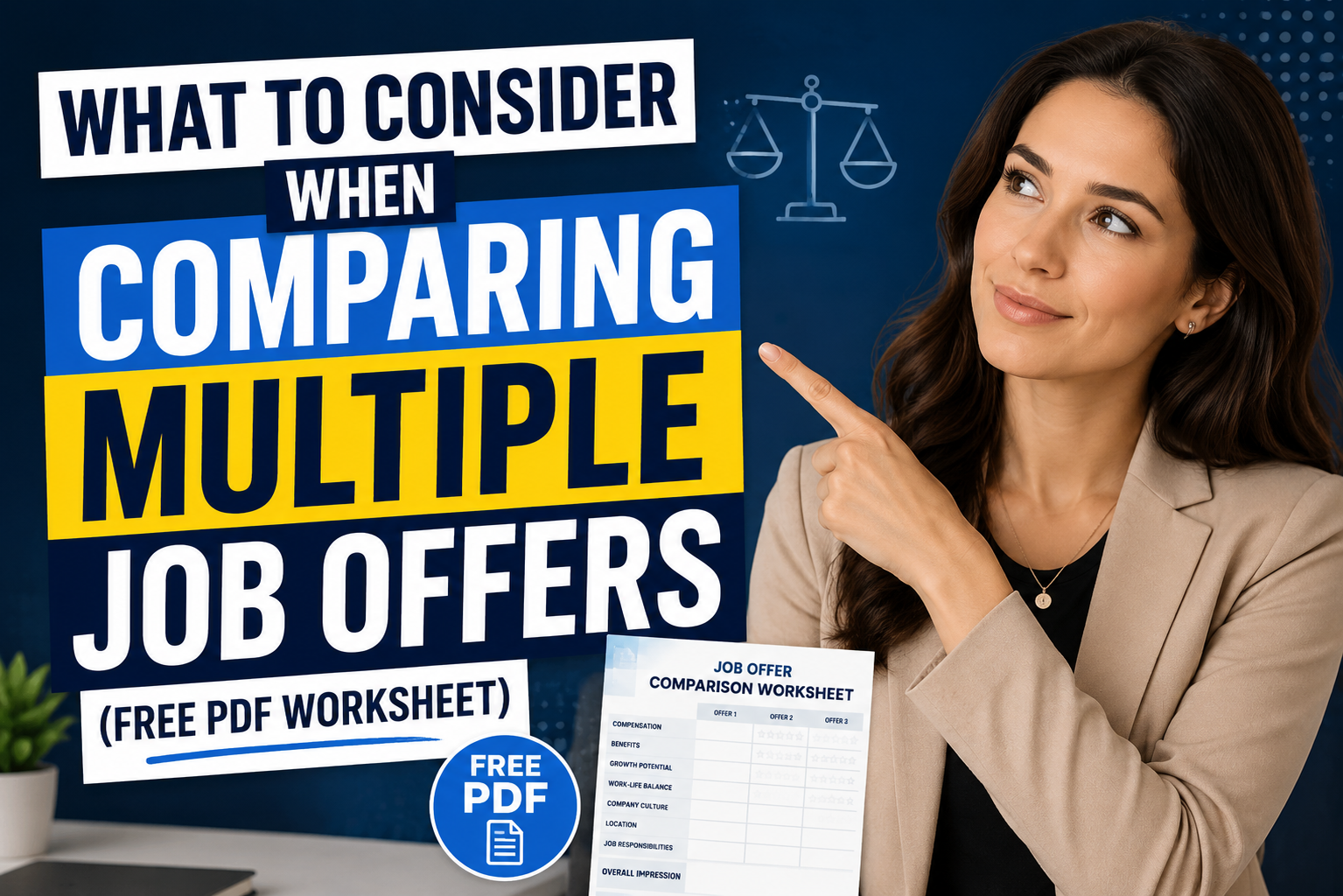
The following post explores What to Consider When Comparing Multiple Job Offers (with PDF Worksheet).
Are you weighing multiple job offers? While receiving more than one offer is certainly a good problem to have, choosing between them can quickly become stressful.
Read: Understanding Your Resume’s Audience
Related: Tips for Growing Your Professional Network
The following post explores how to compare multiple job offers and make a thoughtful, informed decision using practical criteria that matter both short- and long-term success.
Compensation
Compensation is often the first thing job seekers compare, but salary alone rarely tells the full story. A position offering a higher paycheck may appear to be the better deal until you take a closer look at the total compensation package and what comes with it.
Health insurance costs, retirement contributions, bonuses, paid time off, reimbursement programs, and other employer-sponsored benefits can significantly affect the true value of an offer. In some cases, a slightly lower salary can be offset by stronger long-term financial benefits and lower out-of-pocket expenses.

Career Growth
Career growth is another important factor to weigh, especially if you are thinking beyond your next paycheck and considering where you want your career to go over the next several years. Some roles offer immediate stability, while others may create stronger opportunities for advancement, leadership exposure, or skill development.
It is worth asking whether the position helps build experience that will remain valuable in the broader job market. Research the company’s history of internal promotions and ask questions during the interview process to better understand whether there is a realistic path forward.
Work-Life Balance
Work-life balance can have a major impact on job satisfaction, even when the role itself looks appealing on paper. A demanding schedule, constant after-hours communication, or a long daily commute can quickly outweigh the appeal of a higher salary.
Think carefully about how each opportunity will fit into your daily life outside of work. Flexible scheduling, hybrid or remote arrangements, travel expectations, and general workload demands all influence whether a role will feel sustainable over time.
Company Culture
Company culture is often overlooked because it can be harder to measure than compensation or job responsibilities, but it can play a major role in how much you enjoy coming to work each day. Even a strong offer can become a poor fit if the environment feels misaligned with your communication style, values, or expectations.
The hiring process itself can provide useful insight into company culture if you pay attention. Professionalism, responsiveness, transparency, and the overall tone of your conversations with interviewers may offer clues about what the day-to-day work environment will actually feel like.
Location
Location remains an important consideration, particularly for roles that require regular travel, commuting, or relocation. Even a job that seems ideal on paper can become far less attractive if getting there creates ongoing stress, financial strain, or a major disruption to your personal routine.
Consider both the time and cost associated with each location, including commuting expenses, parking, transit costs, and the impact on your daily schedule. If one opportunity offers remote flexibility while another requires a daily in-office presence, that difference may become increasingly important over time.
Job Responsibilities
Job responsibilities deserve close attention because the reality of the work itself will shape your experience more than almost anything else. A recognizable employer or attractive compensation package does not necessarily make a role worthwhile if the actual responsibilities do not align with your strengths, interests, or career direction.
Review the position carefully and compare what was presented in the job description with what was discussed during interviews. If responsibilities seem vague, overly broad, or noticeably different from what you expected, it is worth seeking clarification before making a commitment.
In Conclusion
In conclusion, I hope this article helps you understand what to consider when comparing multiple job offers. It’s easy to get caught up in the excitement of an offer, but taking a little extra time to compare your options carefully can make a big difference in choosing the right fit.
If you’re ready for professional assistance building your ATS-friendly and visually appealing Resume, my team and I are here to support you. Please visit Resume Writing or Submit Your Resume for a risk-free evaluation. We look forward to hearing from you!
Download the ‘Guide to Comparing Job Offers’ Worksheet (PDF)
About the Author: Doug Levin