
Why You Can Be Qualified But Still Ineligible for a Federal Job
The following post take a closer look at Why You Can Be Qualified But Still Ineligible for a Federal Job.
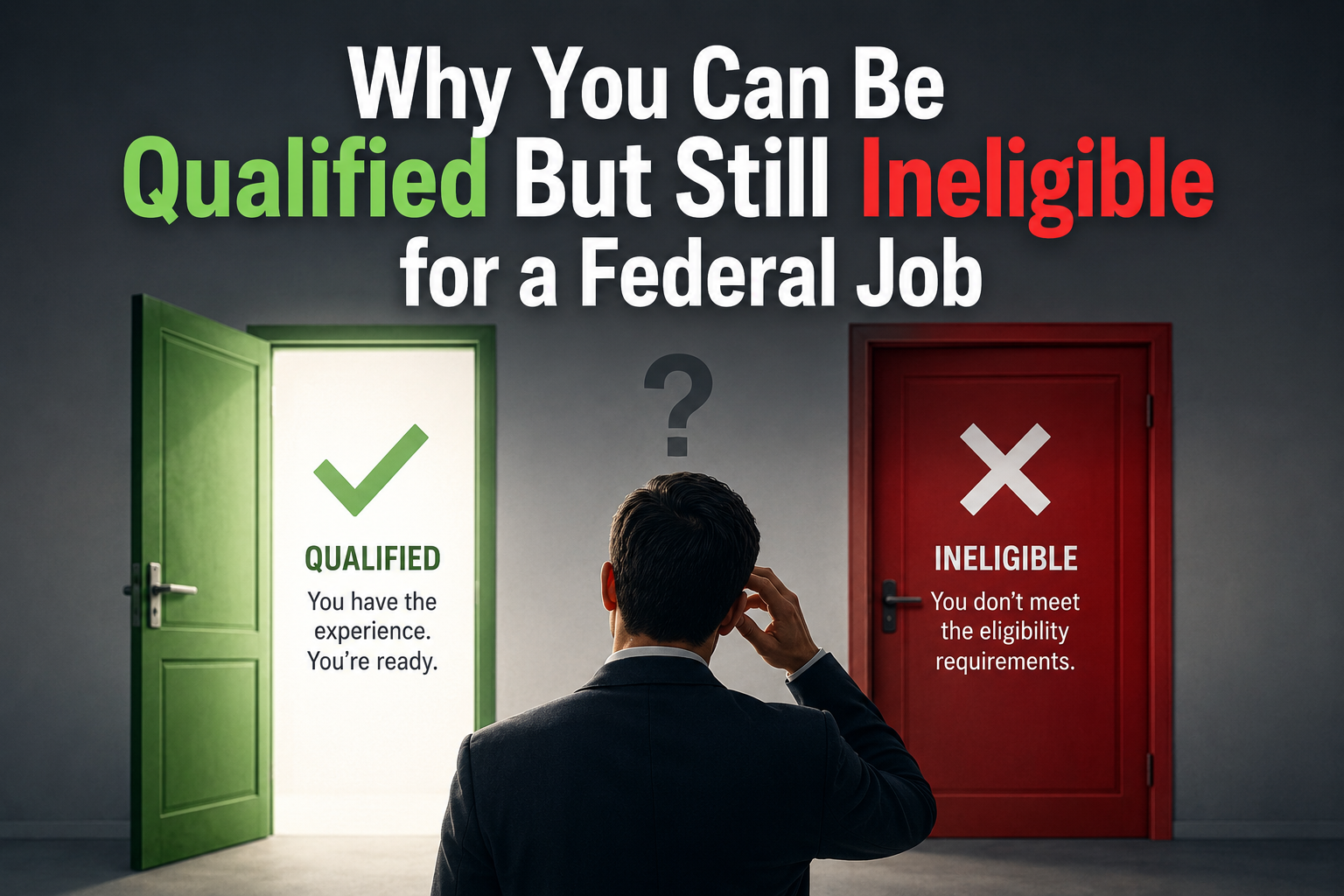
One of the most confusing parts of federal hiring is discovering that you can be fully qualified for a position — and still be rejected before your application is even reviewed.
Read: Understanding Federal Employment Service Types (Competitive, Excepted, and SES)
Related: Best Federal Resume Writing Services
In federal hiring, eligibility and qualifications are not the same thing. Understanding the difference can save you significant time and frustration when applying for jobs on USAJOBS.
Here’s what you need to know.
How Eligibility Works
In federal hiring, eligibility determines whether you are allowed to apply for a given role. On USAJOBS, this is typically determined by the “hiring path” listed on the announcement.
The federal government uses different hiring paths to identify who may apply for certain jobs, such as veterans, current federal employees, military spouses, and more.
Eligibility is separate from your experience, education, or qualifications. Even if you meet the requirements of the position, your application can still be rejected if you do not qualify under the required hiring path.
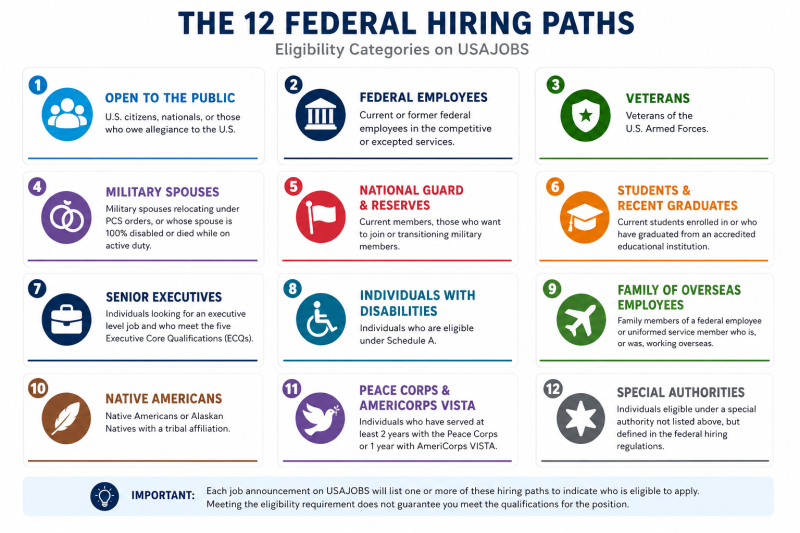
Eligibility Categories
When searching for federal jobs on USAJOBS, you’ll often see a section labeled “Hiring Path” within the job announcement. These hiring paths determine who is eligible to apply for a particular position.
👉 These are the Primary Eligibility Categories on USAJOBS:
- Open to the Public
- Federal Employees
- Veterans
- Military Spouses
- National Guard and Reserves
- Students and Recent Graduates
- Senior Executives
- Individuals with Disabilities
- Family of Overseas Employees
- Native Americans
- Peace Corps and AmeriCorps VISTA
- Special Authorities
- Base Facilities and Land Management Agency
How Qualifications Work
While eligibility determines whether you are allowed to apply, qualifications determine whether you are capable of performing the job.
Qualifications are based on factors such as specialized experience, education, certifications, technical skills, and other requirements outlined in the job announcement.
Hiring agencies evaluate your Federal Resume to determine whether your background aligns with the position. That’s why it’s important for your resume to clearly demonstrate your experience, accomplishments, and qualifications as they relate to the role.
Before applying to a federal job, carefully review the “Qualifications” section of the announcement to verify that you have the experience, education, and requirements for the position.
Qualified but Ineligible (Example)
One of the biggest misconceptions in federal hiring is that being qualified automatically means you’re allowed to apply for a position.
However, eligibility and qualifications are evaluated separately during the hiring process.
In many cases, an applicant may fully meet the requirements for a role, yet still be considered ineligible because they do not fall within the required hiring path listed on the announcement.
👉 Example of Qualified but Ineligible
John spent over a decade working in the private sector as an accountant and eventually decided to pursue a federal career. While searching on USAJOBS, he came across a federal Accounting Officer position that closely matched his background, education, and experience.
After reading the job announcement more carefully, John noticed that the position was only open under the “Federal Employees” hiring path. Because he had never worked for the federal government before, he did not meet the eligibility requirements for the announcement.
As a result, John was considered ineligible to apply (even though he was fully qualified to perform the job itself).
In Conclusion
In conclusion, I hope this article helps you understand why you can be qualified but still ineligible for a federal job. In a nutshell, eligibility determines whether you’re allowed to apply for a position, while qualifications assess how well you meet the specific requirements for the job.
If you’re ready to build your new two-page Federal Resume, my team and I are here to support you. Please use the Contact Us or Submit Your Resume for a risk-free evaluation. JobStars is an A+ BBB-rated service that has earned multiple consecutive Complaint Free Awards. We look forward to hearing from you!
About the Author: Doug Levin