
Understanding the SkillBridge Program (for Service Members)
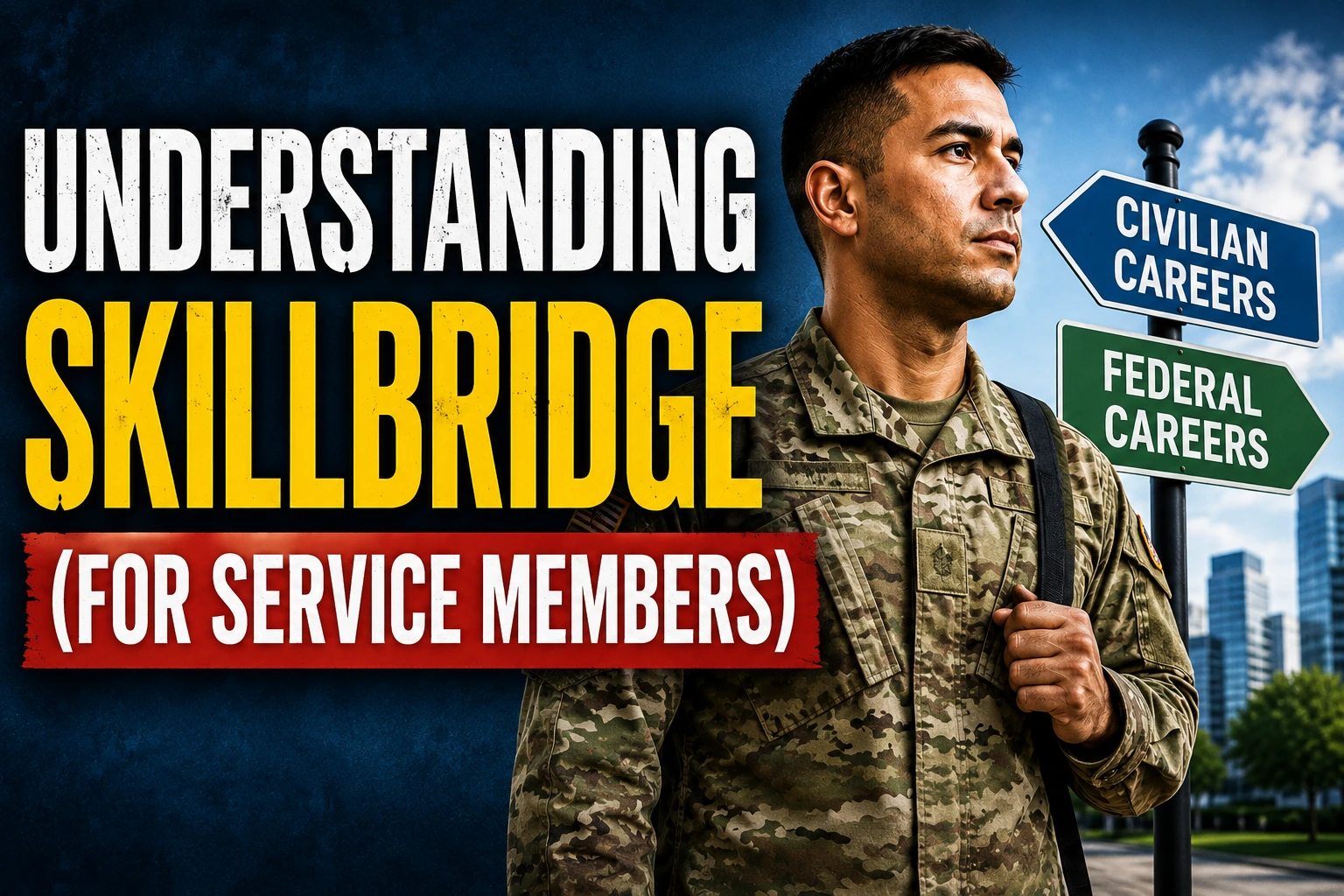
The following post provides explores Understanding the SkillBridge Program (for Service Members).
Is your military service time winding down? If so, SkillBridge is a program you need to know about if you’re looking to make a smooth transition into the private sector.
Related: Best Federal Resume Writing Services
Making the shift from military life to the civilian workforce is a significant change. SkillBridge can help ease that transition by providing real-world job experience and valuable professional connections.
Here’s what you need to know.
Overview
SkillBridge is a program specifically for service members (US Armed Forces) that are seeking private sector employment upon departing the military.
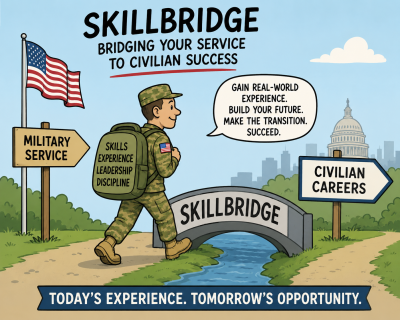
Put simply, SkillBridge helps service members gain private sector experience (while still serving).
The program enables service members to use the final 180 days of their service to train with an industry partner in real-world job experiences (apprenticeships, internships, etc). These engagements not only offer valuable work experience, but also give employers the chance to evaluate your suitability for a FT role.
SkillBridge Eligibility
SkillBridge is generally available to active-duty service members who are within their final 180 days of military service. Participation must be approved by the member’s chain of command, and opportunities can vary depending on various factors and individual circumstances.
Not every service member will qualify automatically, and approval is ultimately based on operational needs and command discretion. In many cases, participants must remain in good standing and complete required transition steps before beginning a SkillBridge opportunity.
Types of SkillBridge Opportunities
SkillBridge opportunities can vary significantly depending on many factors.
Some programs focus on providing hands-on experience in a real-world work environment, while others emphasize technical training, certifications, or career-specific instruction.
Opportunities are available across a wide range of industries, including IT, cybersecurity, manufacturing, logistics, healthcare, skilled trades, and corporate business functions.
Some service members participate in programs with large national employers, while others work with smaller local organizations that align more closely with their unique preferences.
Why SkillBridge is Valuable
One of the biggest challenges for transitioning service members is gaining civilian work experience before leaving the military. SkillBridge helps bridge that gap by allowing participants to make connections, explore industries, and gain hands-on experience before separation.
For many participants, the program also provides valuable insight into how military skills translate into the civilian workforce. In some cases, SkillBridge opportunities can even lead to full-time employment offers after military service ends.
Continue Receiving Military Pay and Benefits
A unique aspect of SkillBridge is that eligible service members may participate in approved training or work experiences while still serving on active duty.
During this period, participants generally continue receiving their regular military pay and benefits.
The program structure can help ease the transition out of military service by providing an opportunity to gain civilian experience before separation without immediately losing the financial stability and support associated with active-duty status.
Working with a Resume Writer
Transitioning from military service to the civilian workforce can sometimes be challenging, especially when trying to translate military responsibilities, accomplishments, and terminology into language that private-sector employers easily understand. Many service members discover that civilian Resumes follow a very different style and structure than military evaluations or Federal Resumes.
Working with an experienced Resume Writer can help bridge that communication gap by translating military experience into clear, employer-friendly language. Having a strong Resume helps service members present themselves more confidently when pursuing internships, apprenticeships, or full-time civilian opportunities through programs like SkillBridge.
In Conclusion
In conclusion, I hope this article helps you better understand the benefits of SkillBridge. For service members preparing for civilian careers, SkillBridge can provide a meaningful opportunity to gain experience, explore new career paths, and take important steps toward long-term professional success.
If you’re ready for professional help to build your ATS-friendly and visually appealing Resume, please fill out the Contact Us form or Submit Your Resume for a risk-free evaluation. JobStars is an A+ BBB-rated service that has earned multiple consecutive Complaint Free Awards. We look forward to hearing from you!
About the Author: Doug Levin