
Winning the Small Moments During In-Person Interviews
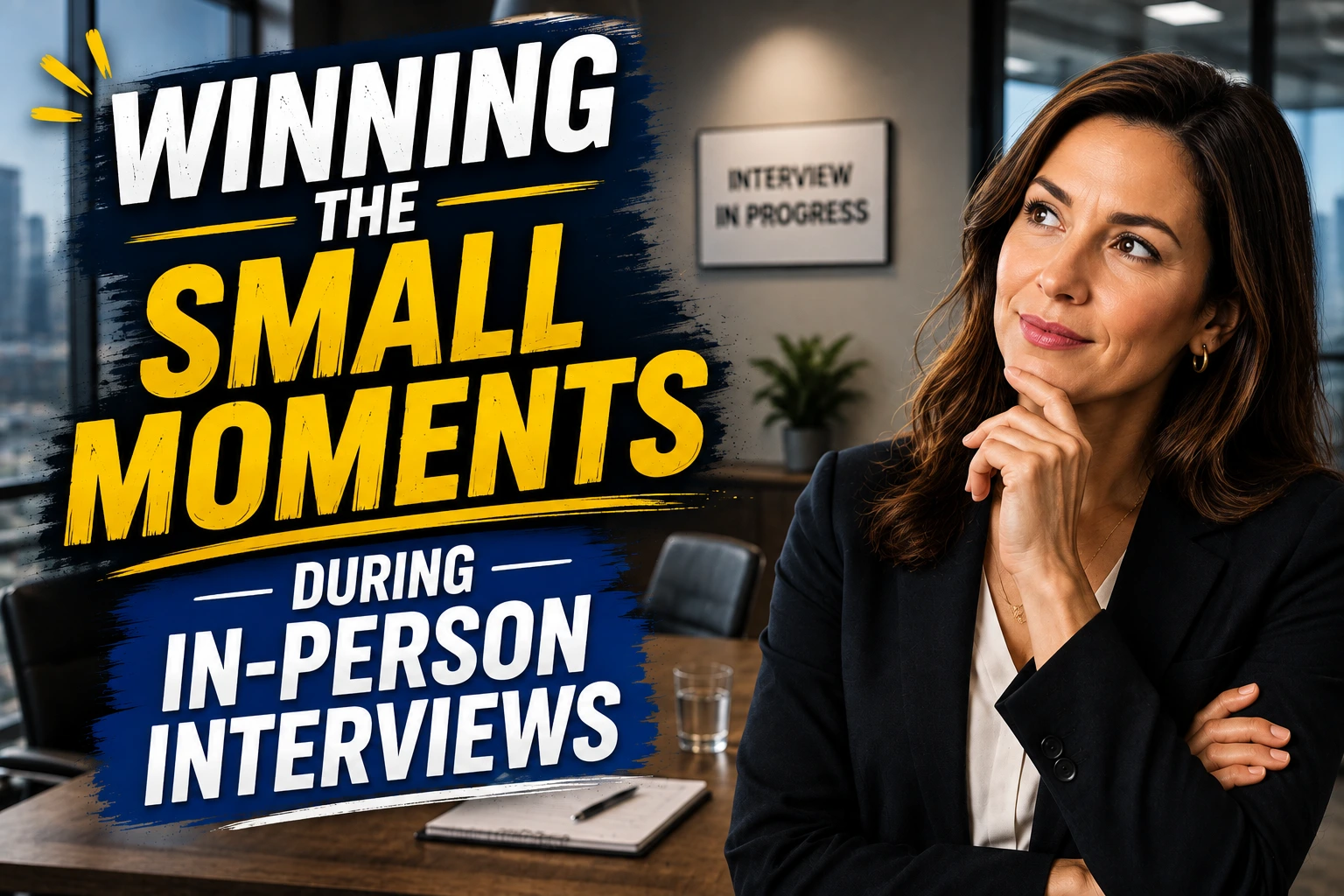
The following post explores Winning the Small Moments During In-Person Interviews.
How much of a job interview is really about answering the questions, and how much is about the impression you make in between them?
Read: 5 Ways to Diversify Your Job Search (Beyond Large Job Boards)
Related: How to Find Hidden Jobs Using Google X-Ray Searches
When two candidates are similarly qualified, can the small moments of an interview influence which person a hiring manager ultimately wants to work with?
Here’s what you need to know.
Overview
Doing well in an interview is about more than giving the right answers. Your responses are obviously important, but an interview includes everything that happens around the formal questions.
Small things such as your initial greeting, the way you make small talk, how you respond to an unexpected moment or how you interact with people in the office matters significantly.
These moments contribute to whether you come across as confident, personable, relatable or simply like someone the hiring manager would enjoy having around.
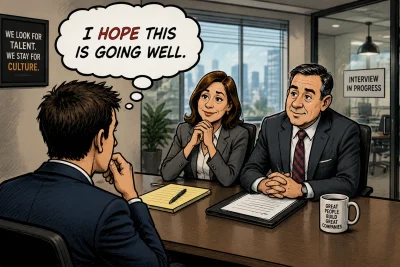
Here are eight of the moments that are easiest to overlook.
Arriving at the Office
Your first impression begins before you ever sit down for the interview. Walking into the building, finding the right office, interacting with the front desk and waiting for the person you are meeting are all part of the experience.
The first few minutes in a workplace can communicate a general sense of how someone carries themselves. There is no discussion of experience or qualifications yet, so the impression is based largely on presence, demeanor and basic social interaction.
Arriving early enough to avoid rushing is probably the most useful preparation for this part. Knowing where you are going and allowing extra time for parking or transportation can take away some of the anxiety that otherwise shows up before the interview even starts.
The First Few Minutes
The first few minutes with the hiring manager establish the initial tone of the relationship. A handshake, introduction, smile and a few minutes of small talk can all happen before the first interview question is asked.
Small talk has a different quality from the formal interview because there is no obvious objective to accomplish. The conversation might involve traffic, parking, the weather, the office or something completely unrelated to the job.
It can help to have the opening of the meeting loosely in mind. Know how you will introduce yourself and have a natural response ready for the inevitable “How are you?” Beyond that, preparation is probably better spent on the substance of the interview.
The Unscripted Moments
The unscripted portions of an interview can provide a different impression from the prepared answers. An interviewer may make a comment about something you said, ask an unexpected follow-up, tell a story about the company or briefly take the conversation in another direction.
Prepared answers demonstrate what you know and how well you can present your experience. Unscripted exchanges reveal something different: how naturally you participate in a conversation when there is no predetermined response. A candidate who can move comfortably between prepared material and spontaneous conversation may come across differently from someone who sounds entirely rehearsed.
Knowing your experience well enough to discuss it without memorizing every sentence leaves room for these moments to develop naturally. A brief pause before answering an unexpected question is perfectly normal, and there is nothing wrong with taking a second to think.
When Something Goes Wrong
An interview does not always proceed exactly as planned. The meeting starts late, the computer will not cooperate, someone interrupts, the conference room is unavailable or the interviewer has to step away for a few minutes.
An unexpected problem briefly changes the nature of the interaction. Instead of evaluating a prepared answer, the hiring manager is seeing how the candidate responds to an ordinary workplace inconvenience.
A little mental flexibility goes a long way here. Expecting an interview to run perfectly can make a minor disruption feel bigger than it is. Giving yourself some room to adapt can make these moments considerably easier to handle.
Meeting Other Employees
Other employees can become part of the interview experience even when they have no formal role in evaluating you. Some interviews include potential colleagues or department leaders, while others involve only a brief introduction in the hallway or a conversation nearby.
These are interesting because the conversation may have nothing to do with the job. A hiring manager might spend an hour discussing your career, while another employee spends two minutes talking with you about the office, a project or something completely ordinary.
The simplest approach is to treat each interaction as its own conversation. A consistent, professional and relaxed demeanor will usually carry across the different people you encounter. It can also be a welcome break from the feeling of being formally evaluated.
The Questions You Ask
The questions a candidate asks can reveal something about personality and interest that the answers to interview questions cannot. Questions can show what caught your attention, what you are curious about and how you are thinking about the position.
The content of the question matters, but so does the fact that the question comes from you rather than from the interviewer. Genuine curiosity can make the final part of an interview feel more like a two-way conversation vs. feeling more mechanical.
Having a few topics in mind can be useful, particularly when nerves make it difficult to think on the spot. A question that grows naturally out of something discussed during the interview can be more comfortable, and often more interesting.
Post-Interview Conversation
The interview does not necessarily stop being an interaction when the final question has been answered. There may be a discussion about next steps, a final comment about the position or a few minutes of conversation while walking back toward the lobby.
The end of the meeting can feel noticeably different from the formal interview itself. The questions have been answered, the evaluation has largely been discussed and the remaining conversation is less structured.
A simple thank-you and an expression of appreciation for the conversation are usually sufficient. After a long interview, the closing moments can be an opportunity to relax rather than another chance to find the perfect thing to say.
Walking Out the Door
The final moments of the visit are still part of the interview experience, even though the candidate may already feel finished. There may be another goodbye with the hiring manager, a brief exchange with the receptionist or another person encountered on the way out.
The departure provides one last impression after the formal evaluation has ended. The hiring manager may not remember the exact words exchanged while you were leaving, but the way an interaction begins and ends can influence how the overall meeting is remembered.
Once the interview is over, there is value in letting the meeting end naturally. Say goodbye, thank the people who helped you and head out without trying to manufacture a final impression.
Conclusion
In conclusion, I hope you find this post helpful for Winning the Small Moments During In-Person Interviews. Hiring decisions are made by people, not Resumes or interview scorecards. All those little interactions make a big difference when it comes to positioning yourself as the ideal candidate for the role.
If you’re looking for professional assistance with building an ATS-friendly and visually appealing Resume, please fill out the Contact Us form or Submit Your Resume for a risk-free evaluation. We are an A+ BBB-rated service that has earned multiple consecutive Complaint Free Awards. We look forward to hearing from you!
About the Author: Doug Levin